Home Loan EMI: Salary Needed for ₹50L, ₹75L, ₹1 Cr Homes
Dreaming of owning your own home in India is a significant milestone for many, yet understanding the true financial commitment, particularly the home loan EMI, is crucial for turning that dream into a sustainable reality. Navigating the costs beyond just the monthly payments requires careful planning, which often begins with understanding how your salary aligns with your home ownership aspirations.
Recent discussions in financial circles, highlighted by Mint Money, focus on a critical question for many aspiring homeowners: how much salary do you truly need for a substantial home loan? The article specifically examines the financial requirements for home loans ranging from ₹50 lakh, ₹75 lakh, to ₹1 crore, detailing the monthly salary benchmarks necessary to comfortably manage EMIs, alongside other significant upfront expenses and charges.
For Indian salaried professionals aged 25-40, this insight is particularly relevant. A home loan is often the largest financial commitment one undertakes, spanning decades of their working life. While the Equated Monthly Instalment (EMI) is central, understanding the complete financial picture – including the mandatory down payment, processing fees, legal charges, registration, and stamp duty – is vital to avoid future strain and ensure your home ownership journey is sustainable.
To navigate this financial landscape effectively, start by thoroughly assessing your current income and existing liabilities to determine a comfortable EMI. Aim for your total debt-to-income (DTI) ratio, including the new EMI, to be below 40-50% for financial comfort. Simultaneously, build a robust corpus for the down payment and all upfront costs, ideally covering 20-30% of the property value before applying for a loan.
⚡ Key Takeaways
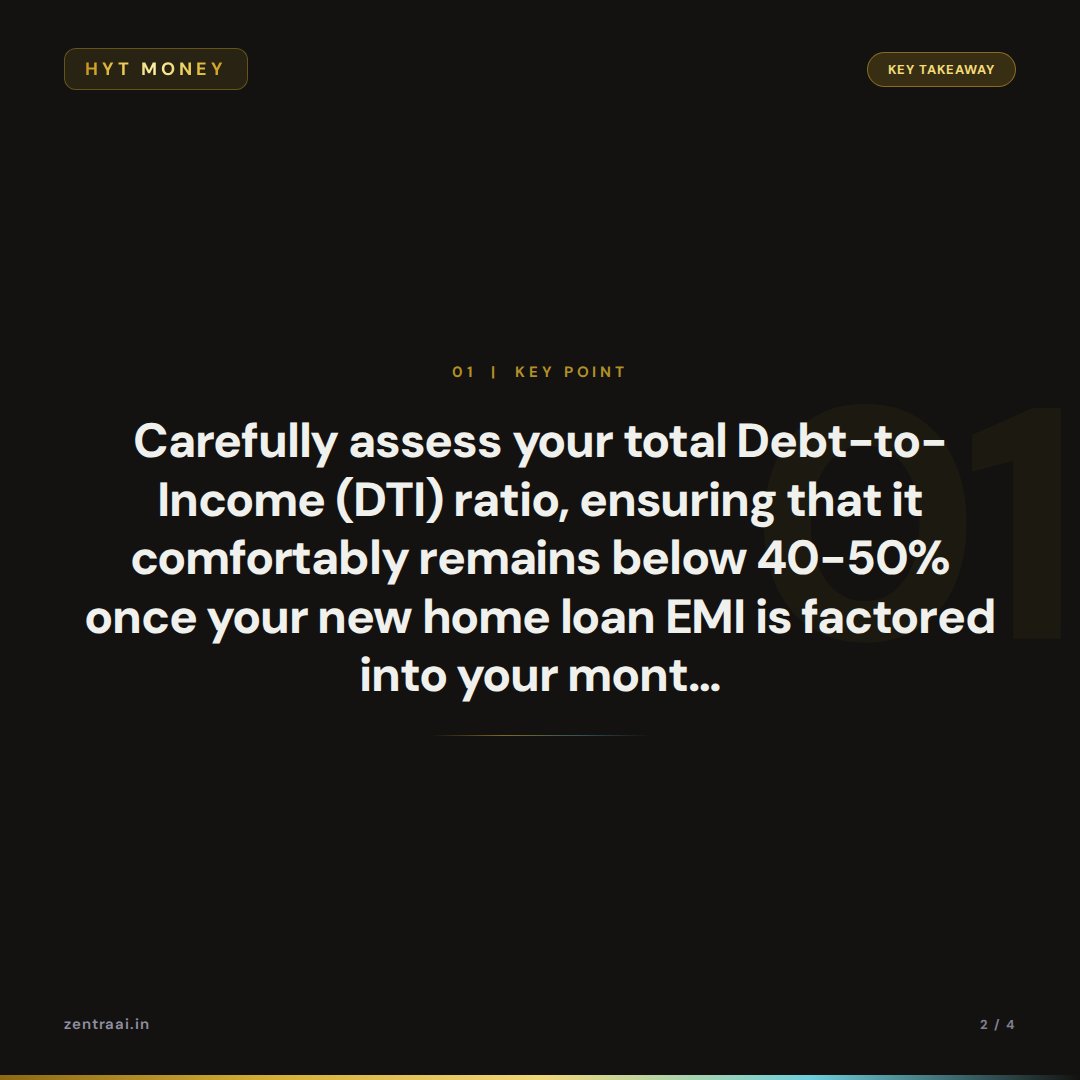
- Carefully assess your total Debt-to-Income (DTI) ratio, ensuring that it comfortably remains below 40-50% once your new home loan EMI is factored into your monthly expenses.
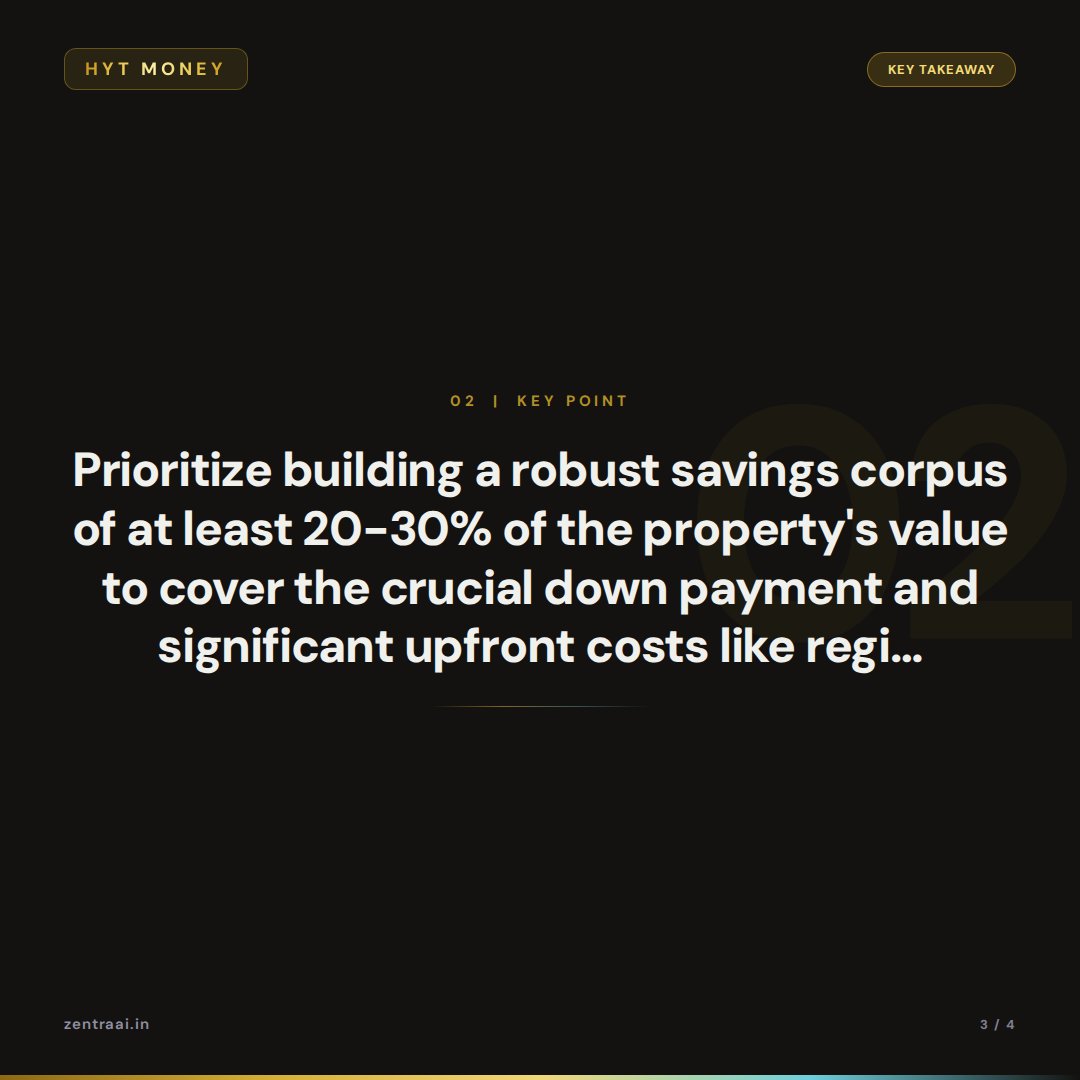
- Prioritize building a robust savings corpus of at least 20-30% of the property's value to cover the crucial down payment and significant upfront costs like registration and stamp duty.
- Look beyond just the monthly EMI; create a comprehensive budget that includes ongoing expenses such as property taxes, maintenance charges, and factor in potential interest rate fluctuations over the loan tenure.
This article is for educational purposes only and does not constitute investment, tax, or financial advice. Please consult a qualified financial advisor before making any financial decisions.
📷 Share as Carousel
Save the slides below and post as a carousel on Instagram, LinkedIn, or WhatsApp — or share the article link directly.


Track your spending, monitor your EMIs, and get AI-powered insights on how news events affect your finances — all in HYT MONEY.
Get HYT MONEY — Free