RBI's Manufacturing Survey: Impact for Salaried Indians
Ever wondered how the Reserve Bank of India keeps its finger on the pulse of the nation's economy? A lesser-known but crucial tool is the quarterly Order Books, Inventories and Capacity Utilisation Survey (OBICUS).
The Reserve Bank of India (RBI) recently launched the 75th round of its crucial Order Books, Inventories and Capacity Utilisation Survey (OBICUS) for July-September 2026. Conducted quarterly since 2008, this survey gathers vital, ground-level data from the Indian manufacturing sector. It meticulously tracks three key metrics: fresh orders received by factories, their existing inventory levels of finished goods and raw materials, and critically, how much of their installed production capacity these factories are actually utilising. Essentially, the OBICUS serves as a vital diagnostic tool, providing the RBI with a real-time health check-up and forward-looking insights into India's industrial heartbeat and future growth potential.
While the technical name 'OBICUS' might sound distant, its findings indirectly influence the financial well-being of every salaried professional in India. A strong performance in manufacturing, indicated by robust order books, manageable inventory levels, and high capacity utilisation, often translates directly into positive economic outcomes. This includes the creation of more job opportunities, potential for better salary increments across various industries, and a generally optimistic outlook for the economy. Conversely, a significant slowdown reported by the survey could signal caution, potentially impacting employment stability, the performance of your investments in equity or debt, and even broader consumer sentiment. Understanding these links helps you connect macroeconomics to your personal financial strategy.
As a salaried professional, you don't necessarily need to pore over every OBICUS report, but understanding its significance empowers you to make informed decisions. Use such economic indicators as a prompt to strengthen your personal finances proactively. This means ensuring you maintain an adequate emergency fund, ideally covering 6-12 months of essential expenses, to act as a buffer during unexpected economic shifts. Furthermore, diversify your investments across different asset classes and sectors to mitigate risk, rather than putting all your eggs in one basket. Lastly, continuously invest in your skills and education, making yourself indispensable in a dynamic job market, irrespective of short-term survey outcomes. Financial resilience is built on awareness and consistent action.
⚡ Key Takeaways
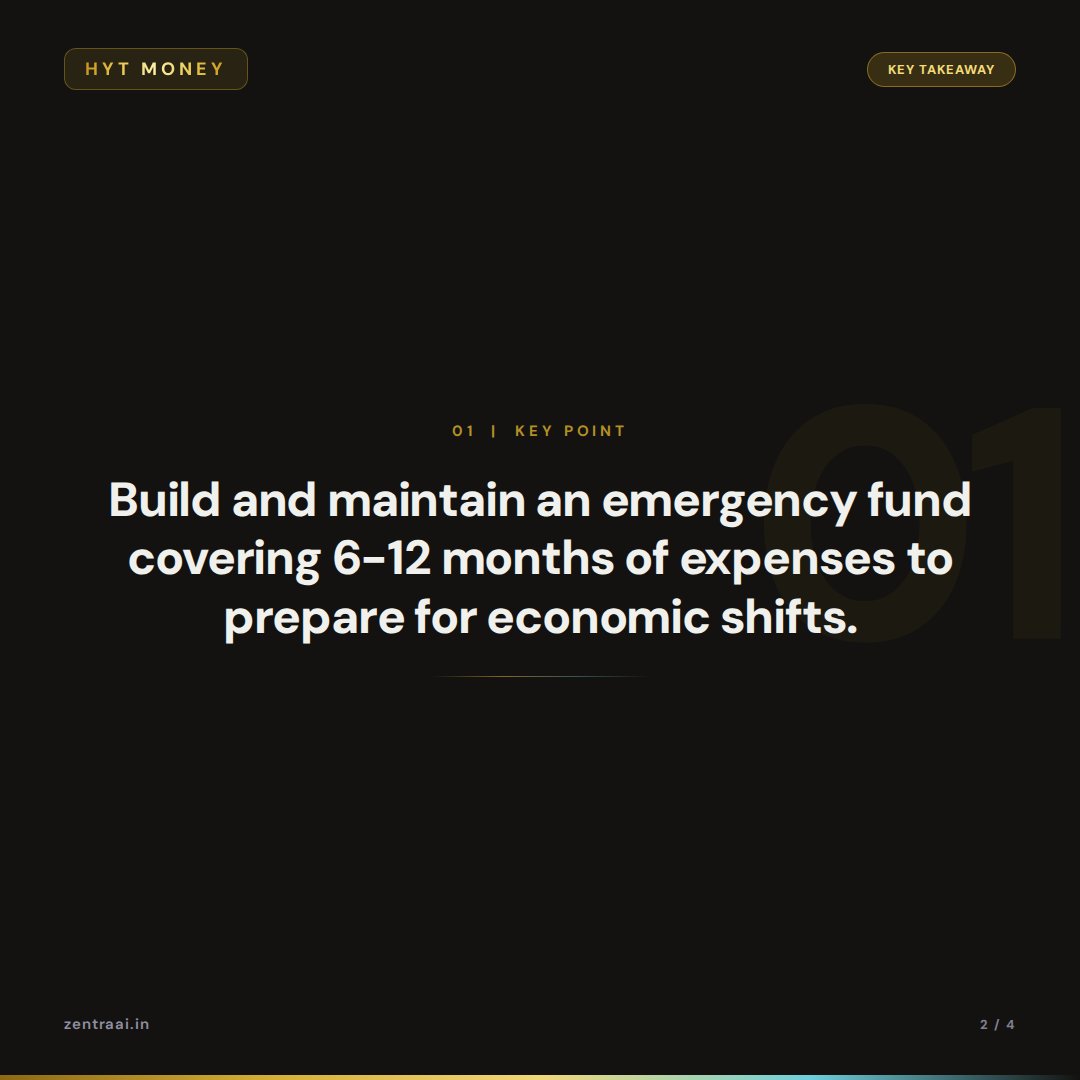
- Build and maintain an emergency fund covering 6-12 months of expenses to prepare for economic shifts.
- Diversify your investments across different asset classes and sectors to reduce risk.
- Continuously invest in your skills and education to stay competitive in the job market.
This article is for educational purposes only and does not constitute investment, tax, or financial advice. Please consult a qualified financial advisor before making any financial decisions.
📷 Share as Carousel
Save the slides below and post as a carousel on Instagram, LinkedIn, or WhatsApp — or share the article link directly.



Track your spending, monitor your EMIs, and get AI-powered insights on how news events affect your finances — all in HYT MONEY.
Get HYT MONEY — Free