SEBI Extends ETF Trading Rules: What Indian Investors Need
Ever wondered how the prices of your Exchange Traded Funds (ETFs) are truly determined and traded on the stock market? SEBI, India's market regulator, recently announced an important extension to the implementation of new, comprehensive trading norms specifically designed for ETFs.
The Securities and Exchange Board of India (SEBI) recently extended the deadline for new operational guidelines concerning Exchange Traded Funds (ETFs). These upcoming norms address crucial aspects like how ETF base prices and price bands are set, the call auction process in the pre-open session, and close-out procedures for failed trades. This extension provides market participants with more time to prepare, aiming for a smoother transition for these significant changes.
For Indian salaried professionals, ETFs are increasingly popular for their diversification benefits and cost-effectiveness. The core intent of SEBI's regulations is to enhance market integrity, reduce volatility, and improve pricing efficiency within the ETF segment. While an extension means a delay in these benefits, it also reflects SEBI's meticulous approach. These changes aim to make ETF trading more robust, transparent, and ultimately safer for your investments.
As an investor, this update calls for informed awareness, not immediate action regarding your current investments. Continue focusing on your long-term financial goals and systematic investment plans (SIPs) in ETFs that align with your risk profile. Use this period to deepen your understanding of ETFs, including their expense ratios and tracking performance. Diversify your portfolio thoughtfully and regularly review your strategy without reacting to short-term regulatory timelines.
⚡ Key Takeaways
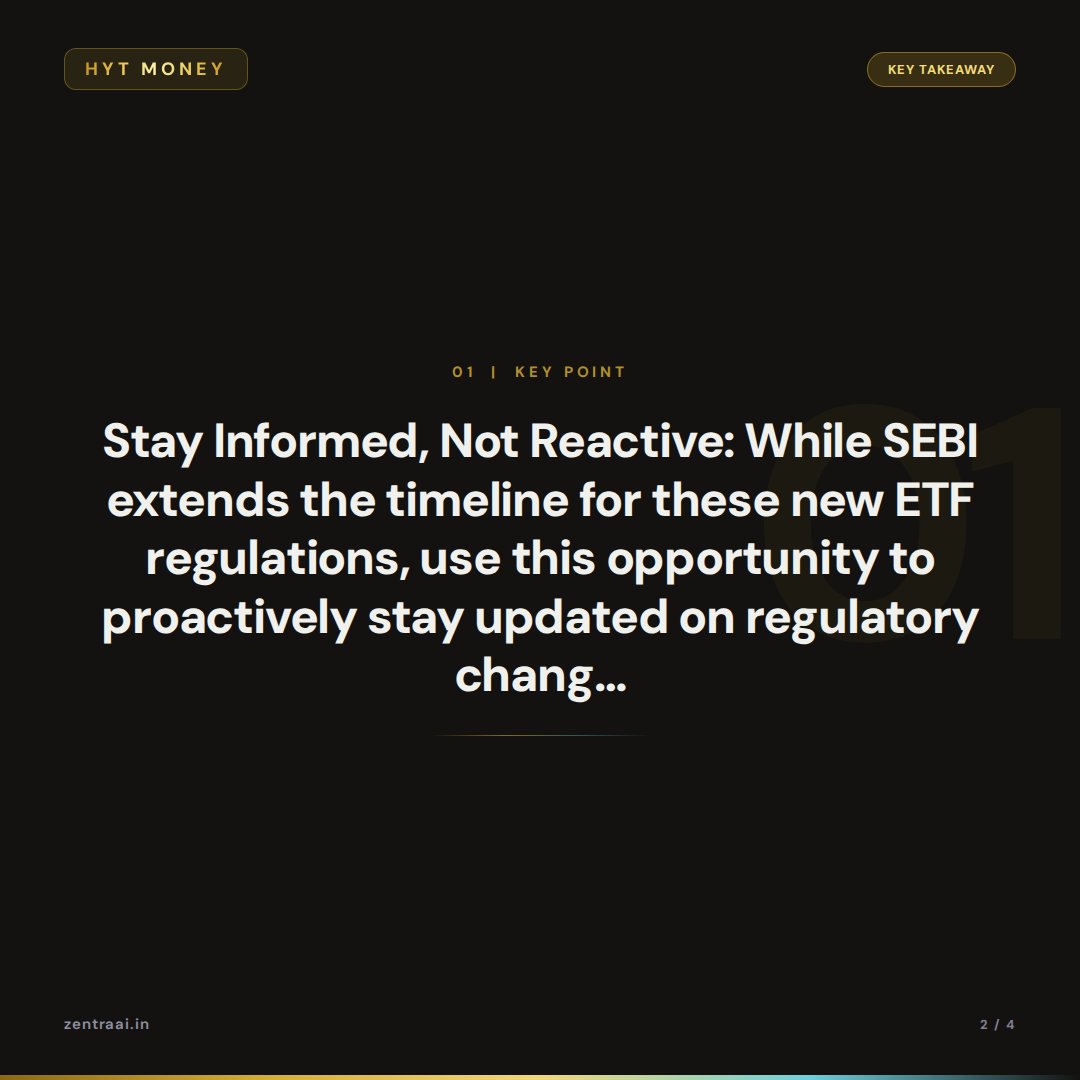
- Stay Informed, Not Reactive: While SEBI extends the timeline for these new ETF regulations, use this opportunity to proactively stay updated on regulatory changes that are designed to foster market stability and investor protection for you.
- Deepen Your ETF Knowledge: Beyond just investing, dedicate time to thoroughly understand the core mechanics of your chosen ETFs, including their tracking methods, inherent expense ratios, and the underlying assets they represent.
- Prioritize Long-Term Discipline: Continue your disciplined approach to investing through Systematic Investment Plans (SIPs), always focusing on your diversified portfolio and long-term financial objectives rather than getting swayed by short-term market news or regulatory shifts.
This article is for educational purposes only and does not constitute investment, tax, or financial advice. Please consult a qualified financial advisor before making any financial decisions.
📷 Share as Carousel
Save the slides below and post as a carousel on Instagram, LinkedIn, or WhatsApp — or share the article link directly.



Track your spending, monitor your EMIs, and get AI-powered insights on how news events affect your finances — all in HYT MONEY.
Get HYT MONEY — Free