ITR-3 or ITR-4: Guide for Salaried Professionals
Navigating income tax forms can feel like solving a complex puzzle, especially when you have multiple income streams beyond your salary. For Assessment Year 2026-27, the Income Tax Department has provided a crucial checklist to clarify whether ITR-3 or ITR-4 is the right form for you.
The Income Tax Department has provided a crucial checklist, reported by Mint Money, to guide taxpayers on selecting between ITR-3 and ITR-4 for Assessment Year 2026-27. This clarification is vital for individuals with business or professional income. ITR-3 is generally for those with income from a proprietary business or profession, including capital gains or income from foreign assets. ITR-4, on the other hand, is specifically designed for individuals, HUFs, and firms (other than LLPs) opting for the presumptive taxation scheme under Section 44AD, 44ADA, or 44AE, where income is declared at a presumed rate, simplifying compliance significantly. This guidance aims to streamline the filing process and reduce common errors.
For many salaried professionals aged 25-40, additional income streams like freelancing, consulting, or running a small side business are becoming common. If your total income includes business or professional earnings, choosing the correct ITR form is paramount. Filing the wrong form can lead to processing delays, notices from the tax department, or even penalties. Understanding whether your income qualifies for the simpler presumptive taxation under ITR-4, or if you need to file detailed accounts with ITR-3, directly impacts your compliance and peace of mind. This clarity from the ITD helps you make an informed decision, ensuring you accurately declare all your earnings.
To ensure you pick the right form, start by thoroughly reviewing all your income sources beyond your regular salary for AY 2026-27. If you have business or professional income, ascertain if you meet the eligibility criteria and turnover limits for presumptive taxation schemes (e.g., turnover up to ₹2 crore for businesses under 44AD, or gross receipts up to ₹75 lakh for professionals under 44ADA). If you declare a loss, or your income is below the presumptive rates, ITR-4 might not be suitable, and ITR-3 could be required. Don't hesitate to consult a qualified tax advisor for personalized guidance, especially if your income structure is complex. Planning this well in advance of the filing deadline will save you hassle.
⚡ Key Takeaways
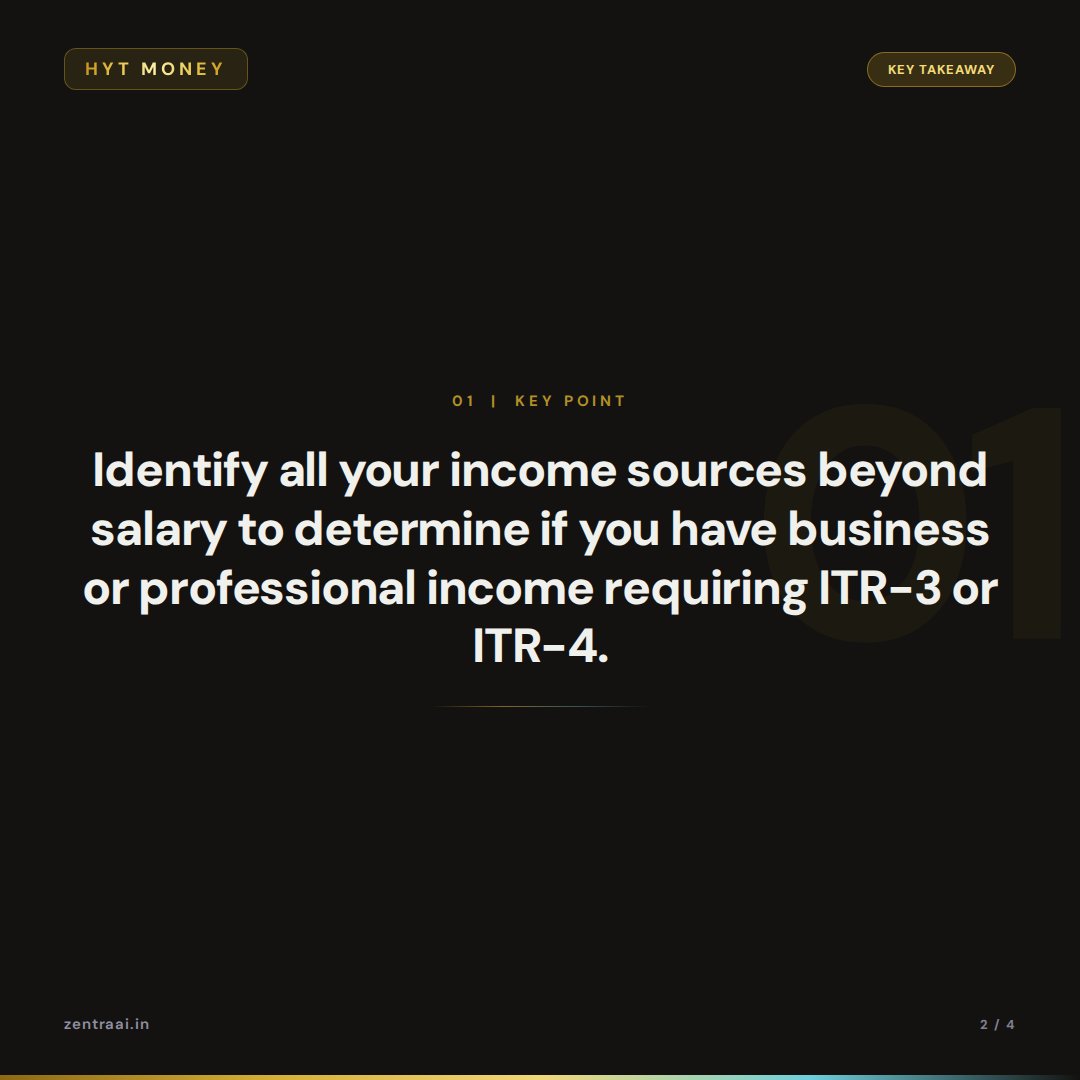
- Identify all your income sources beyond salary to determine if you have business or professional income requiring ITR-3 or ITR-4.
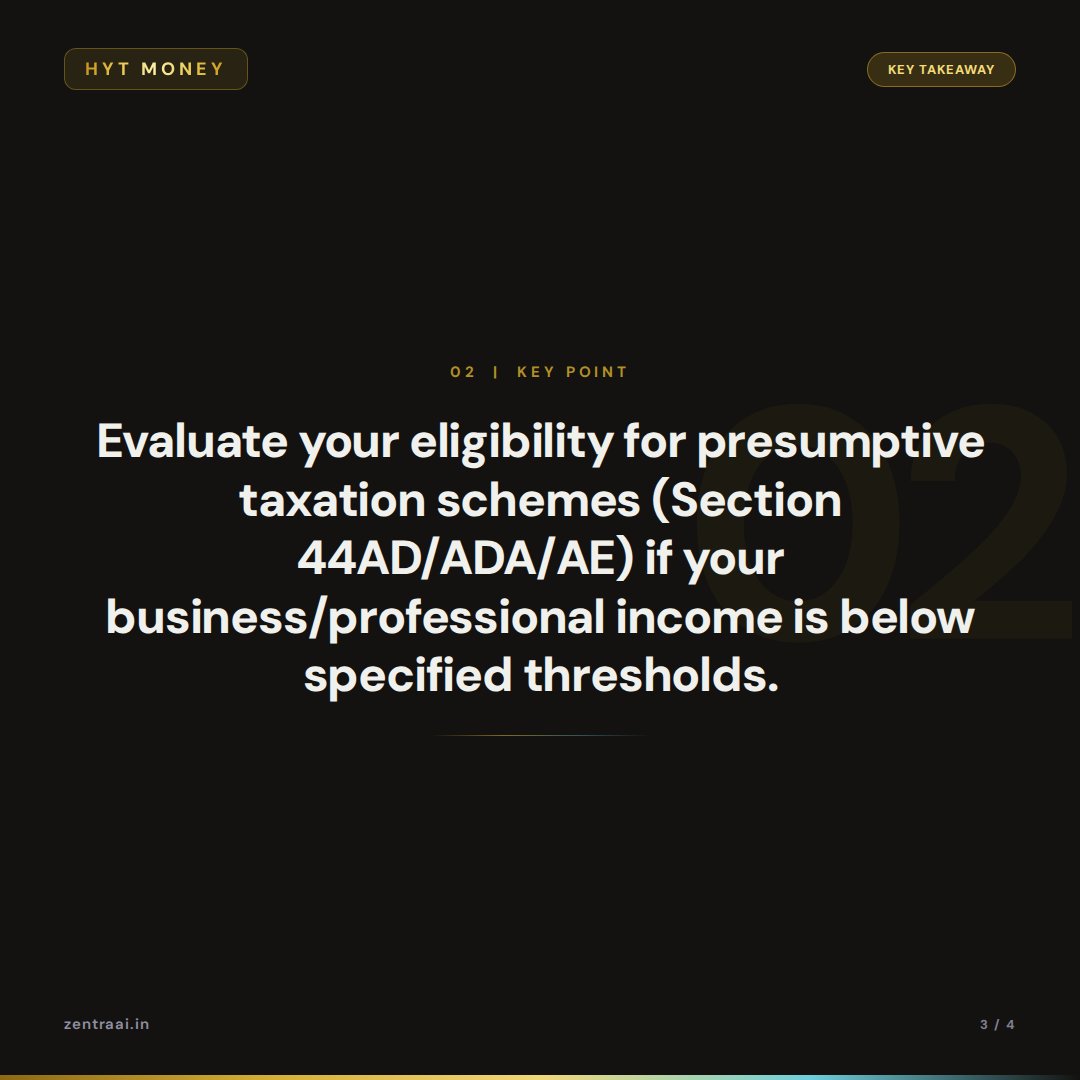
- Evaluate your eligibility for presumptive taxation schemes (Section 44AD/ADA/AE) if your business/professional income is below specified thresholds.
- Consult a tax professional if you are unsure about your income classification or the appropriate ITR form to avoid filing errors and potential penalties.
This article is for educational purposes only and does not constitute investment, tax, or financial advice. Please consult a qualified financial advisor before making any financial decisions.
📷 Share as Carousel
Save the slides below and post as a carousel on Instagram, LinkedIn, or WhatsApp — or share the article link directly.


Track your spending, monitor your EMIs, and get AI-powered insights on how news events affect your finances — all in HYT MONEY.
Get HYT MONEY — Free