RBI's Internal Ombudsman: A stronger financial safety net
Ever wondered if there's a safety net when dealing with your bank or credit company? The Reserve Bank of India is actively working to ensure your financial grievances are heard and resolved efficiently.
The Reserve Bank of India (RBI) recently hosted its third annual conference for Internal Ombudsmen (IOs) on July 13, 2026, in Mumbai. As reported by the RBI, this significant event brought together IOs and senior executives from various regulated entities, including banks, Non-Banking Financial Companies (NBFCs), and Credit Information Companies (CICs). The conference's core focus was to enhance the effectiveness and standardization of internal grievance redressal mechanisms across the financial sector. It underscored the RBI's continuous commitment to fostering a fair and robust environment for consumer protection, ensuring public complaints are addressed uniformly and efficiently.
For you, as a salaried professional, this conference means a stronger safety net for your financial interactions. An Internal Ombudsman acts as an impartial, senior official within your financial institution, specifically tasked with reviewing and resolving customer complaints not settled by regular channels. This mechanism ensures your grievances – be it unfair charges, loan delays, or credit report inaccuracies – receive an unbiased review. It aims for faster, more transparent resolutions, enhancing your trust in financial institutions and safeguarding your interests against potential service shortcomings, ultimately contributing to a more secure financial journey for you.
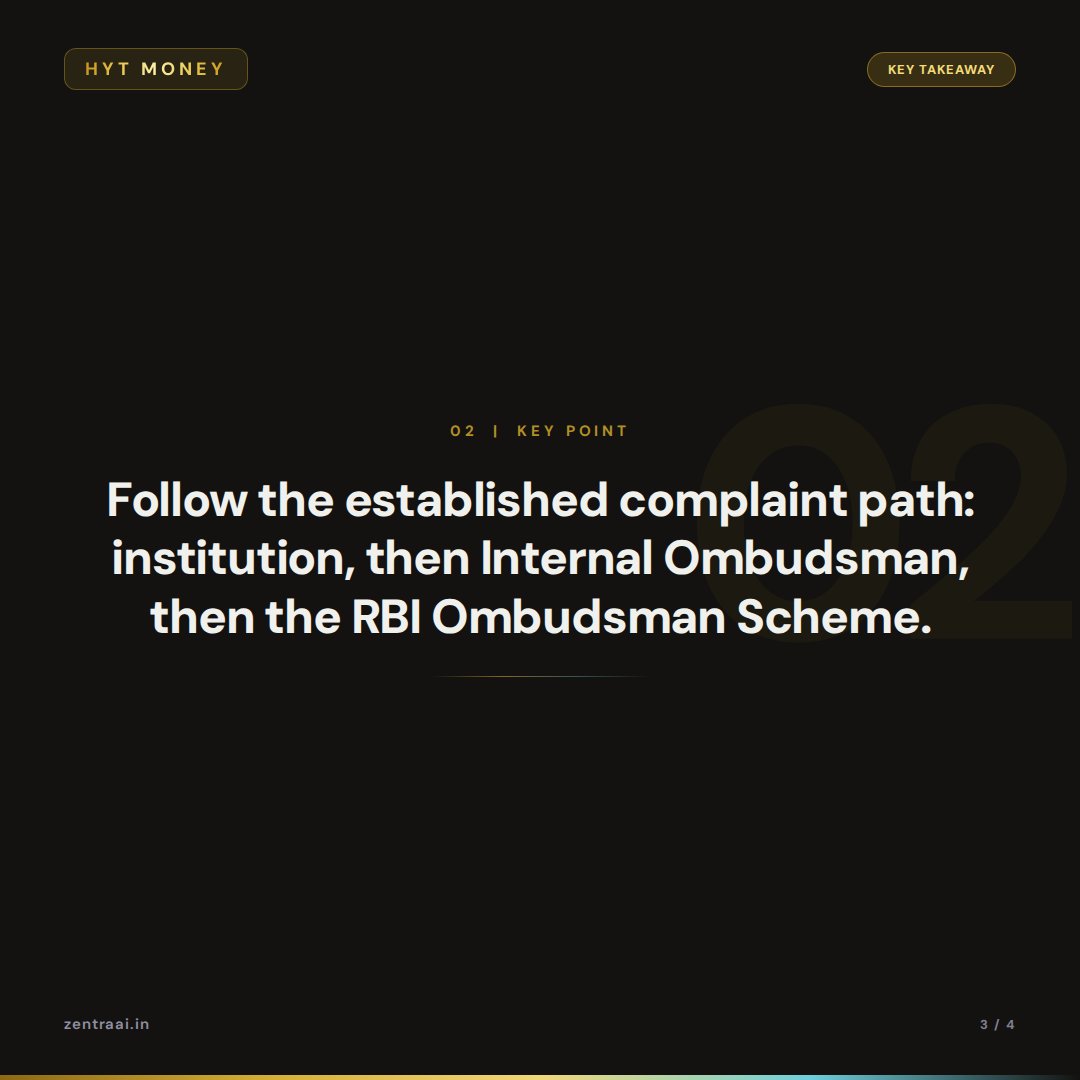
If you encounter a financial service issue, knowing the correct steps is crucial. First, always contact the institution's primary customer service. If unresolved or unsatisfactory, escalate it to their Internal Ombudsman, whose contact details are usually on the company website. Meticulously document all communications, including reference numbers, dates, and names. If the Internal Ombudsman's decision doesn't satisfy you, or they don't respond within 30 days, you can then approach the free and accessible RBI Ombudsman Scheme for further resolution.
⚡ Key Takeaways
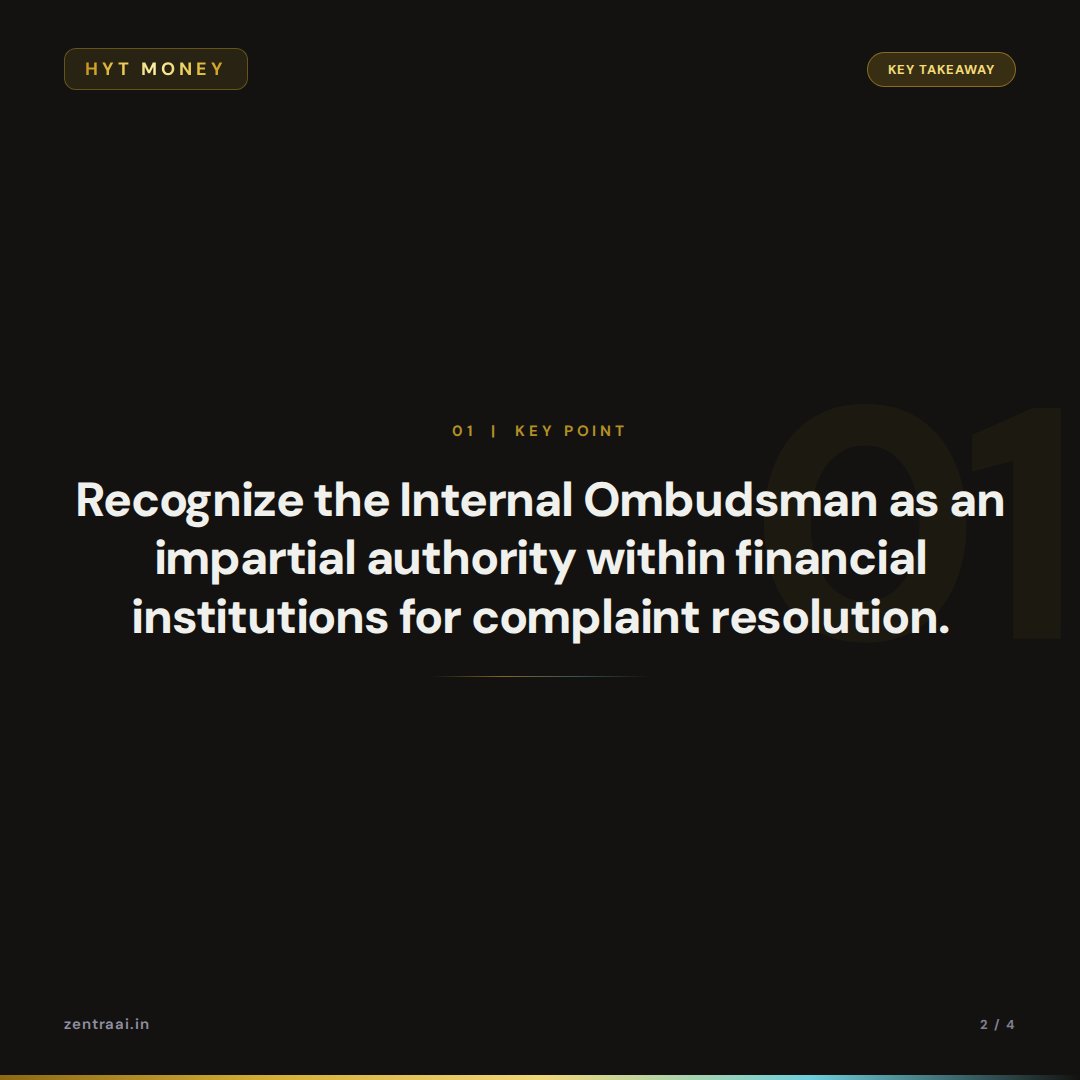
- Recognize the Internal Ombudsman as an impartial authority within financial institutions for complaint resolution.
- Follow the established complaint path: institution, then Internal Ombudsman, then the RBI Ombudsman Scheme.
- Always keep detailed records of all interactions and documentation for any financial grievance you raise.
This article is for educational purposes only and does not constitute investment, tax, or financial advice. Please consult a qualified financial advisor before making any financial decisions.
📷 Share as Carousel
Save the slides below and post as a carousel on Instagram, LinkedIn, or WhatsApp — or share the article link directly.

Track your spending, monitor your EMIs, and get AI-powered insights on how news events affect your finances — all in HYT MONEY.
Get HYT MONEY — Free